

In our exclusive Cover Story, Power-performer Shefali Shah talks to Aakanksha Naval-Shetye about playing the iconic Vartika Chaturvedi in Delhi Crime 3, decodes the actor behind giving Indian cinema some of the most beautiful, strong and celebrated characters on screen and also reveals how she chooses to convert the pressures of expectation and fear into fuel, keeping her present, vulnerable, and honest in front of the camera
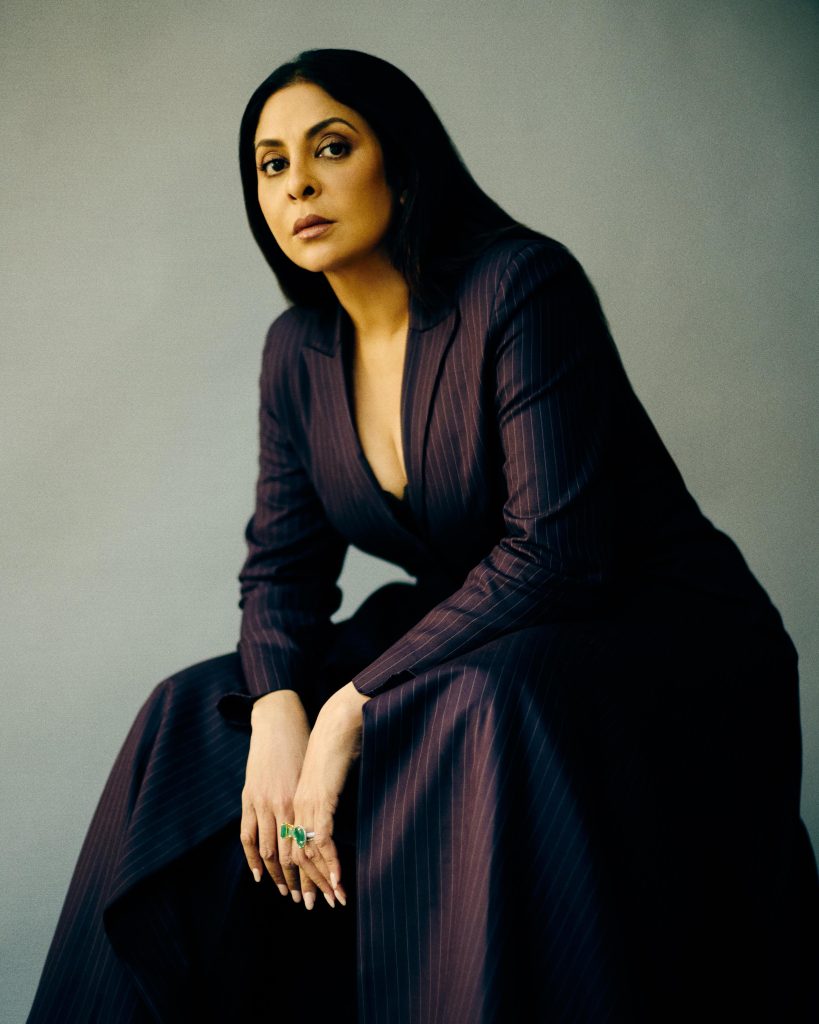
Grit, grace, and an unshakeable moral spine — few actors embody these qualities as effortlessly as Shefali Shah. With Delhi Crime, she didn’t just step into the shoes of DCP Vartika Chaturvedi; she etched the character into the collective consciousness, turning a stoic police officer into a symbol of resilience, empathy, and quiet authority. As the series returned with its much-anticipated third season, she once again shouldered the weight of expectation with a performance that is deeply internalised and fiercely restrained. Vartika is not defined by bravado or bluster, but by control of emotion, of circumstance, of a system that often threatens to collapse under its own pressure. And it is in this control that Shefali finds extraordinary power.
What makes Shefali Shah’s portrayal so compelling is her understanding of what not to show. Anger is channelled, not unleashed. Grief is absorbed, not displayed. Beneath the crisp uniform and measured voice lies a woman who feels everything intensely, yet refuses the luxury of emotional release. And Shefali plays this duality with remarkable precision, walking the razor-thin line between compassion and command and never allowing one to eclipse the other. It’s a performance built on empathy, discipline, and a profound respect for the character’s responsibility.
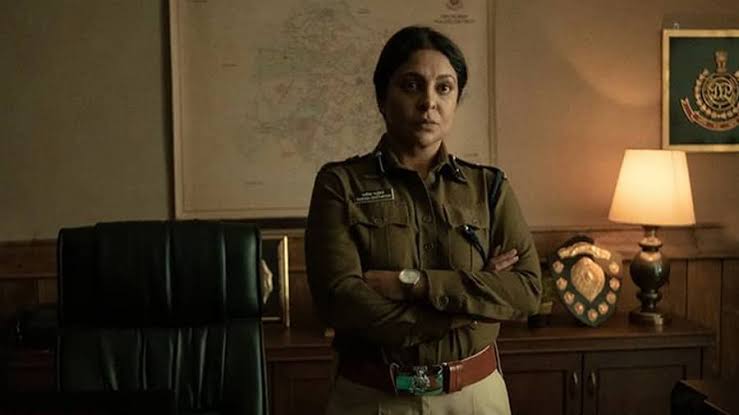
Beyond the authority of the uniform, Shefali Shah’s career stands as a masterclass in intentional choices and is heavily defined by a rare emotional fearlessness and an instinctive gravitation towards characters that sit in moral grey zones. Her characters have consistently redefined the emotional and moral landscape available to women on screen. From the tender vulnerability of Monsoon Wedding and the sharp social awareness of Dil Dhadakne Do to the unsettling quiet of Jalsa, the simmering rage of Darlings, the lyrical restraint of Three of Us and the fractured intimacy of Ajeeb Daastaans, her performances have consistently expanded the emotional vocabulary available to women on screen. Shefali doesn’t chase volume or spectacle; she trusts silence, internal conflict, and lived-in detail.
Her method is deeply immersive and she inhabits a character fully, carrying their emotional weight long after the cameras stop rolling, allowing each moment to register with authenticity rather than effect. Fear, self-doubt, and a relentless demand of herself are integral to her process, not obstacles to overcome but tools she sharpens. She approaches every role as if it were her first, questioning, reassessing, and surrendering completely to the truth of the moment. Her process, she reveals, is immersive, bordering on obsessive and she carries her characters home, lives with them, and gives them everything she has, scene by scene, moment by moment. Fear, she admits, is a constant companion — but it is also her fuel, keeping her present, vulnerable, and honest in front of the camera.
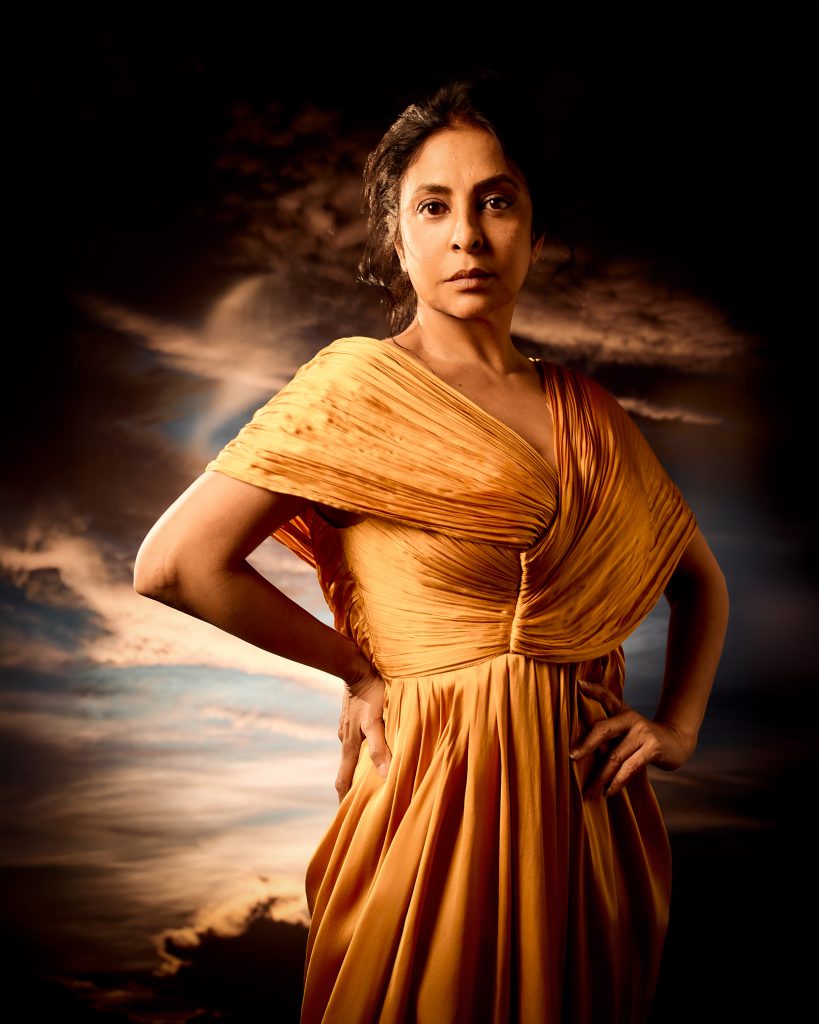
It is this combination of discipline, empathy, and emotional rigor that makes her performances feel startlingly real and why, across decades and genres, Shefali Shah remains one of the most trusted and transformative actors in Indian cinema.
In this exclusive conversation, Shefali Shah opens up about the emotional architecture of playing Vartika, the responsibility of portraying truth without theatrics, and the instinct-led method that has made her one of Indian cinema’s most formidable and trusted performers.
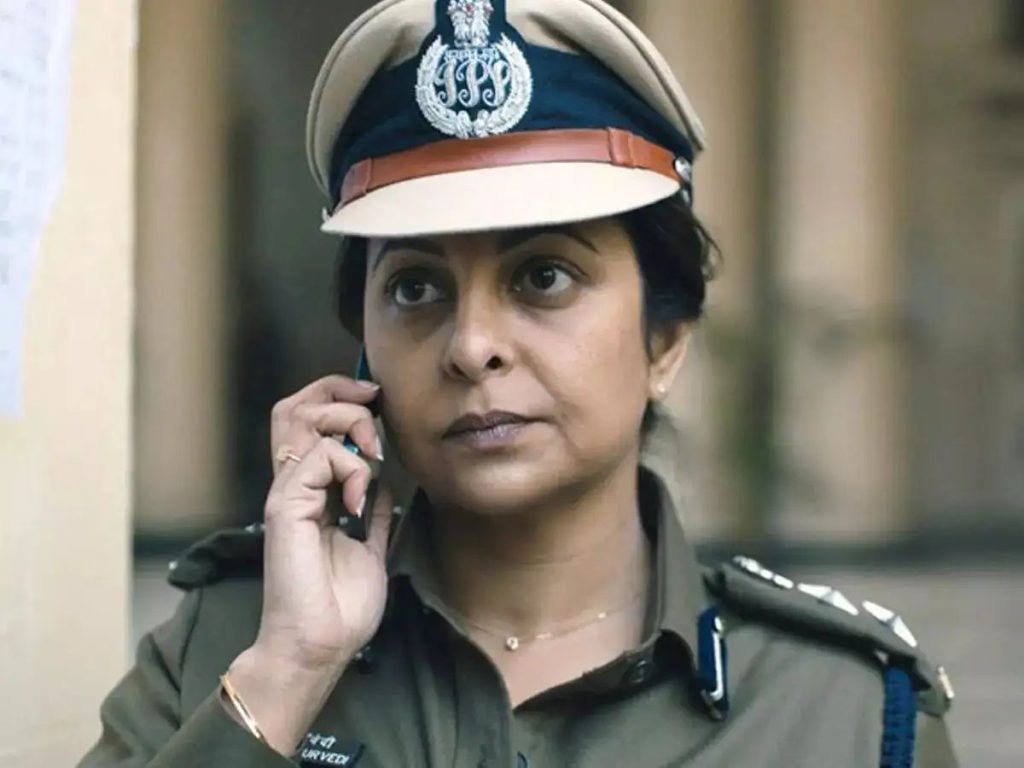
Delhi Crime 3 was one of the most-awaited series on Netflix. What was the headspace for you around its release?
Until all the reviews came out, I was freaking out. Like freaking out. I wanted to hide and whatever. But once I read the reviews, I couldn’t stop crying. And my team was just telling me, don’t cry right now. You have other stuff to do. So grateful. I’m just grateful!
“I feel every emotion in its maximum intensity. There is no mid-path. I like to believe I’m an empath. I like to believe I’m righteous. I am brutally honest. I am strong. But I also think one of my superpowers is my sensitivity and vulnerability, which is every woman’s strength too. So, a lot of times, what gets applauded is the strength. But you don’t know where that strength comes from.The fact that we can feel so strongly and get affected and feel vulnerable, that is where the strength comes from to fight or correct it or overcome it.”
When you come on screen, we know we are in for a cinematic treat. But how do you deal with the pressure of those expectations when you are facing the camera?
I’m scared before I go on set for anything. I have this constant thought and feeling somehow that I will not be able to deliver. That the director will say action and I’ll just stand there dumbfounded. I won’t know what to do. So I’m terrified, terrified every time I’m going to go in front of the camera.
And that’s what works for me. Because every time I go on set, it’s like the first time ever that I’m facing the camera and I have to give it my all.
Yes, a character like Vartika puts higher pressure on you because she’s become something else. ‘Madam Sir’ has become iconic. So it’s very scary because I was like, what if I haven’t been able to deliver? What if I have let Vartika down? What if I have let Delhi Crime down? So the responsibility is very high. And I’m constantly under like, ‘Oh God, what is it, I don’t know what to do’. ‘What is going to happen’, etc, etc.
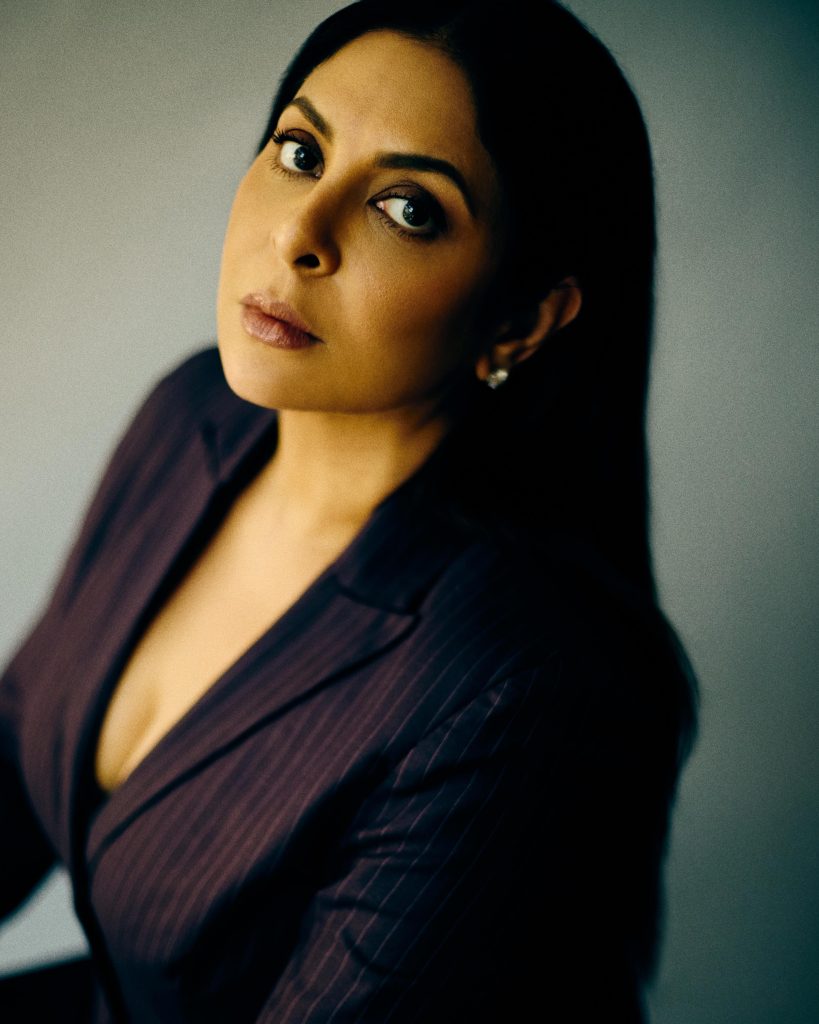
Playing DCP Vartika Chaturvedi, there is a very thin line that you walk between maintaining that balance between empathy and the authoritative figure that you are. But as a person, are there moments when you feel that this is not what Vartika should be doing and she should just go bash that criminal!
Yes, there are a lot of times she just wants to beat those people up. And she’s angry. But she also knows the protocol and the importance of following that. She is under control of her emotions, and she is aware of the post he holds.
She knows you cannot harm the person because he or she is going to go for a medical examination. And then instead of trying to catch the culprits, she knows, they’ll have to spend time trying to prove that they did not beat up the criminal. So like in Season 2 also, one of her subordinates says that these guys are not going to talk unless we use brute force. And she says, ‘Don’t leave a mark’. So that’s who she is.
She knows that she does not have the luxury of time to indulge in crying or screaming and shouting. She just has to channelize all of that anger into saving those girls. She knows she is meant to protect the ones who need protection and she’ll try to do that to the best she can.
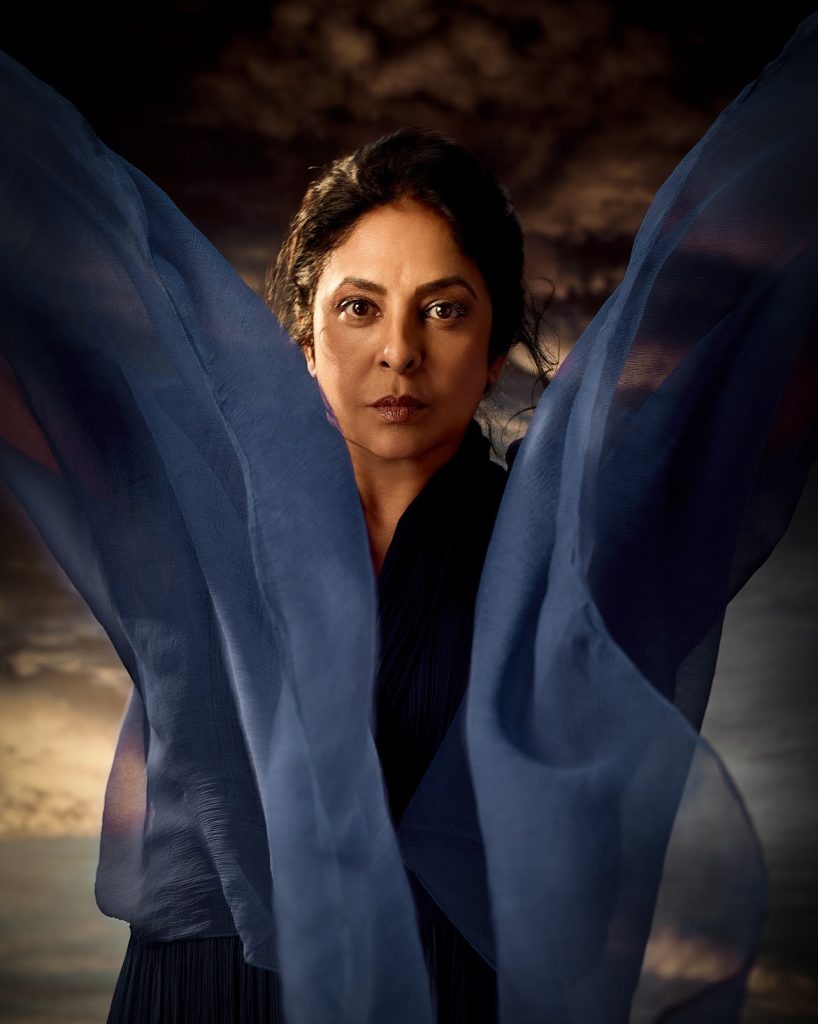
Is there an anecdote you’d like to share from the sets or a scene that was kind of challenging for you?
There’s one particular bit in Season 1, I remember that moment where I’m interrogating that guy, the first guy, and he describes what he did. And he’s almost proud of it. I wanted to kill that man. I wanted to tear his eyes out. And he was an actor. But it was just too much to hear.
And in this Season, there is this young girl who’s telling me her story and how she landed up where she is. And it was a heartbreaking story. And that actor is so terrific. I could not stop crying. I just could not stop weeping. And then we had to be like, but Vartika can’t be crying like this. She has to give her the confidence, the solace that, okay, I’m going to try and do as much as I can to make this right. So she can’t be crying. So, there was one take that we have where I’m not crying and they decided to use that. But these moments really affect you. Also there’s a last moment in the show, where I had to say one word, a line or something and I just couldn’t get down to it because I was choking. I was so emotionally overwhelmed. So, yeah there are these moments that completely shake you. But then that is the beauty of what we do, make you feel intensely.
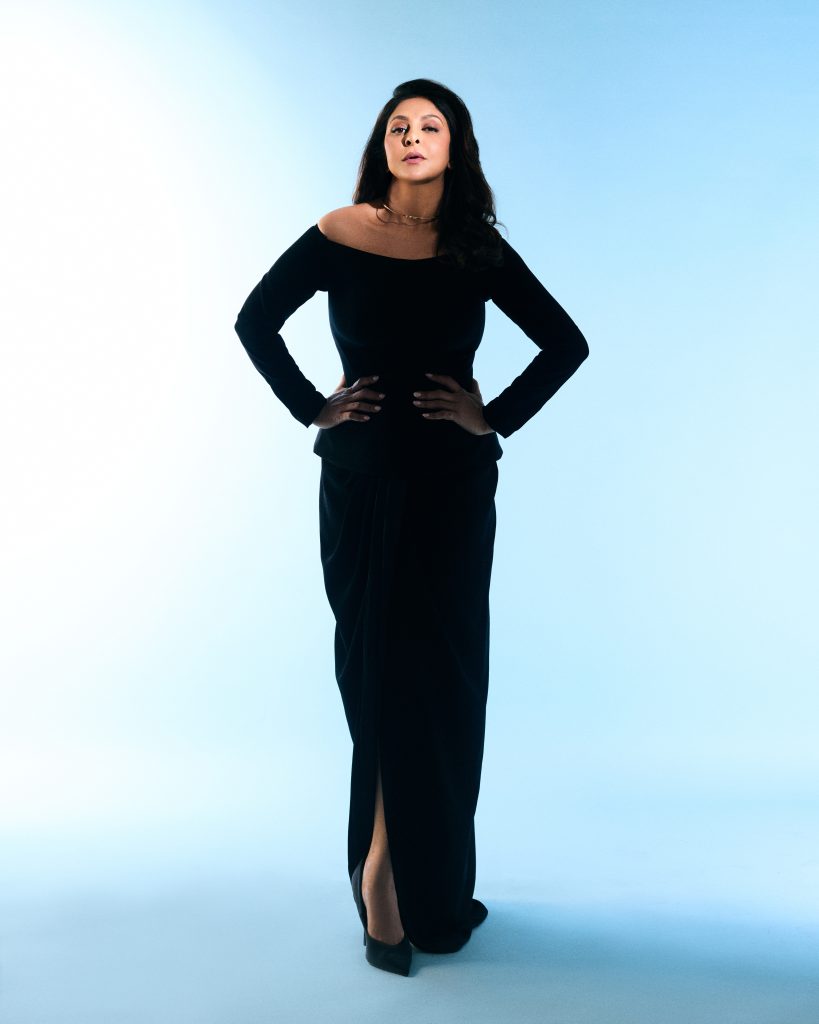
Does the helplessness of the character in some situations weigh heavy when you are back home?
See, as an actor or as a person, I cannot detach from a project when I’m in the middle of the project. I can’t detach from it from day one till day end, till I finish the whole thing. So I finish a shoot, go back home. Wrap my family work, eat my food and dive back into the script. That’s how I work. I get obsessive. So I have no interest in detaching from it. You know, like I don’t want to.
And as far as the scene is concerned, at that point of time, Vartika feels everything to her maximum. She’s given everything to that moment. So she has nothing to carry forward. She’s consumed by that moment. That moment has passed. Now, the next one. So it’s like she doesn’t have much to carry. Similarly, even I’ve given it everything I have. I have nothing left to take in terms of emotions, but the character stays.
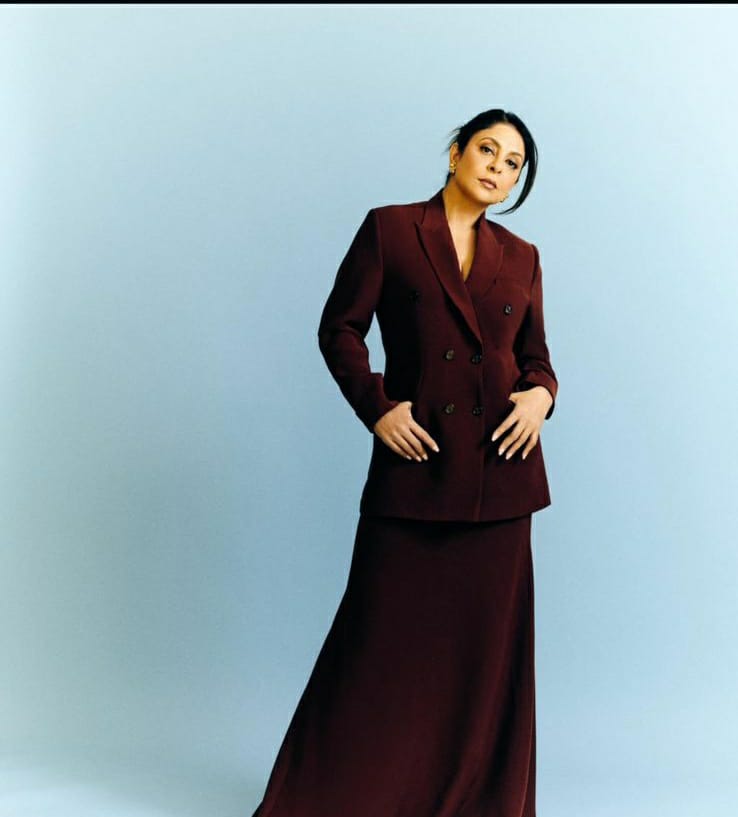
The first season won an Emmy. Does that play on your mind, about the season having to live up to the previous ones or take each one as it comes, a new one?
When we did Season 2 and we had Tanuj (Chopra) join us as a director, after Richie (Mehta) had directed Season 1, so when we met Tanuj, I said, Tanuj, let’s treat it like a new show. You can’t match up to 1, because that has become its own thing – largely also because you can’t match up to the case! It took six years for Richie to research that and he had put in six years. The other seasons we’ve been doing over like a year, two years, three years. So let’s not try to do this in comparison. Let’s make it its individual show and make it terrific. And everyone works towards making everything they create or any project like their best. So that is constantly there.
Of course, it’s Delhi Crime and it’s gotten so much love and respect. And it’s one of the finest shows that’s come out of India. So obviously the pressure is, are we going to match up? And then there is the pressure that I carry because I don’t know whether I’ll be able to match up to how big this woman has become. And will I? Like every season her shoes get only bigger. And I don’t know whether I’ll be able to fit those shoes.
The kind of resilience that you bring forth is the strength that shows through your characters… Almost all of your works be it Darlings or Jalsa, Ajeeb Daastaans, Once Again, Dil Dhadakne Do, Monsoon Wedding, Three of Us… It’s a long list! There’s a very strong relatability that women feel with the characters you play. Is there a pull towards playing certain kinds of characters or do you feel kind of responsible for making these choices as a woman and as an actor?
Not really. But maybe it’s because my gut has chosen the right stuff! Somebody once told me, chef, trust your gut. It doesn’t let you down. And it’s never gone wrong. So, that’s where it comes from. It comes from honesty. It comes from where and what I believe in. And I think that shows. I just feel grateful that people can resonate with it. And it feels humbling to know that people actually see it, see her.
A lot of people come to me and say, you are an inspiration. And I’m like, oh, God, I don’t know what I’m doing. And I don’t even know if you should be following me. But thank you. I’m humbled.
Is there any specific character you have essayed, that you would say is the closest to the real you? What is the real Shefali like?
I think she’s a part of all of her characters. I feel every emotion in its maximum intensity. There is no mid-path. I like to believe I’m an empath. I like to believe I’m righteous. I am brutally honest. I am strong. But I also think one of my superpowers is my sensitivity and vulnerability, which is every woman’s strength too. So, a lot of times, what gets applauded is the strength. But you don’t know where that strength comes from.
The fact that we can feel so strongly and get affected and feel vulnerable, that is where the strength comes from to fight or correct it or overcome it. So I think that is what it is.
And yes, people have this misconception that, oh, she’s very serious. And a lot of people who met me are like, we come to you and we’re very intimidated. And then after some time they realize, ‘oh, she’s chill’. We were all sitting together doing an interview with the entire cast and our director and they were asked, who’s the one who would be the maximum amount of madness on set? And all of them pointed to me. So, yeah, that’s a good mix of everything!
How do you maintain your own humorous side when the kind of roles that you do take us into a different zone altogether?
While I’m doing the scene or while I’m in that moment, I’m in that moment. But otherwise, I can’t help but be myself. It’s just who I am. And I don’t know what else to be.
Your cinematic journey has seen you make some tough choices and that involves saying no to roles that may have been commercially safe to play. And along the way of your choices, you have redefined what we as cinema-goers can expect of women characters on screen…
Thank you. But I also have to give credit where it’s due, which is to a lot of these directors who thought of these parts. And decided and said, it’s not going to be played by a 16 or an 18 or a 20-year-old. Which is not conventional at all!
Like some years ago, if I was told that you’ve been playing these supporting parts, but in your 40s you will headline a show. I would have laughed. But I’m doing that and it’s humbling. And it’s empowering. Thank God for OTT, we got this chance!
Earlier, either you’re a star or you’re some accessory to a film. There wasn’t a place for actors and they didn’t get their due. Or creative people who made unconventional cinema, they didn’t even get a showcasing. A lot of scripts didn’t get green-lighted because makers were like this is not going to work at the Box-Office. Forget it. But OTT kind of opened that up for all of us. And it’s so good.
And yes, you correctly said it. I think in my career, I’ve said more no than yes. Earlier, it used to really bother me that I am not getting the kind of work I want to do when I’m sitting at home and all of it. But then I realized that the kind of work I want to do isn’t going to come every day. So either I can go to work every day and do what I don’t believe in. And I can make money and I can be popular in my own place. Or I accept this and wait. It could be a year, it could be two years. But wait for what really touches me and hits me hard. Where I just feel compelled that I have to be a part of this.
“Earlier, it used to really bother me that I am not getting the kind of work I want to do when I’m sitting at home and all of it. But then I realized that the kind of work I want to do isn’t going to come every day. So either I can go to work every day and do what I don’t believe in. And I can make money and I can be popular in my own place. Or I accept this and wait. It could be a year, it could be two years. But wait for what really touches me and hits me hard. Where I just feel compelled that I have to be a part of this.”
If there was one advice you could give yourself, say in 1995 when you did Rangeela. That was a small bit, but we noticed. So, what would be the one advice you’d give yourself 30 years back?
Be more focused and aggressive. And figure a team that is going to get you those parts. I never had an agent until nine years ago. And I used to be like, I’ll get offered, I’ll choose. I never reached out to people. So I wish I had someone to guide me and say, you know, you are talented. But you need to also meet people to tell them you want to work. How are they supposed to imagine it? So I wish there was somebody who had driven this business sense into me. I didn’t have it at all. I still don’t, but I have a team who thinks.
I think of the creative, like this part, I want to do or I don’t. But then there is a team who thinks for me, who wants to protect me fiercely.
As an actor how has your approach changed today to people, to projects, especially when people probably come to you with bigger promises than they can deliver? Have you wisened up to these things?
I don’t know. Maybe. When it comes to creatives, I still take people at face value.I believe a person is good until they do something to prove they’re bad. Like, the logic of innocent till proven guilty. Not the other way around. So, I believe, genuinely, I believe people are good. So, if they’re saying something, they’ll follow it through. They’ll stick by their word. It’s not how necessarily it works out. And then I figure, ‘oh, s**t, I was duped again’ (laughs). But luckily, I have someone who protects me fiercely. So creatively, I’ll go all out and forget it if we don’t get paid. But now there’s a team that’ll be like ‘You handle the creatives. Let’s handle the technicality’! So, have I wisened up? I still trust people very blindly.
You have largely been your own hero, but if you had a chance to be cast opposite one ‘hero’, who would it be?
Hero! I don’t know (laughs). Robert Downey Jr. or Benedict Cumberbatch perhaps! They’re brilliant. Phenomenal actors. And, of course, there are the legends – there is Robert De Niro, and there is Dustin Hoffman. These are legends.
What’s coming next after this one?
So I did a film with Vipul (husband, filmmaker Vipul Shah). He has directed and produced it. It’s called Hisaab. It’s a bank heist.
And he’s coming back to a bank heist after Aankhen. There’s Jaideep Ahlawat, Abhishek Banerjee… An amazing bunch of actors. It’s a very witty, fun thriller. Then there is another one I shot for which is probably the most wacko character I have ever played. Like she’s really something and I had so much fun playing her. And there are a couple of things that we are in discussion with and there are two, three scripts which I really liked. The intention is that we do it. But of course a film takes time to fall into place.
Do you think this is the best time to be an actor or do you think that somewhere because you have made those choices, there is people’s faith in terms of the filmmakers also putting faith and trust that a movie or a series like this can be pulled off, because there are fabulous actors like you doing justice to it!
When we did Delhi Crime 1, there was no network on board when it was created. So it was the faith of the director and producers that we’re going to make this and we’re going to make it with this actress. They could have gone to any star and nobody would have said no to this, but Richie was very clear that he wanted this person to do justice to it. And thank God for that.
So, yes, the stories are changing. The working environment or the OTT platform has facilitated it even more to be able to tell varied stories, which may or may not fit into the parameters of the Box-Office. So all of that is changing… There are more women-led characters, women-led shows, projects.
And then of course, when someone puts faith in you and puts you up there, the others see what has been delivered and then they believe in it further. Like before Delhi Crime and all of that, I had always been lucky to be loved by my peers or directors, and they would come up and say, you’re one of the finest, but it never translated into work.
But Delhi Crime happened and then there was Jalsa, there was Darlings… So, there is so much that opened up and it is great. I mean, people are seeing me as a lead or parallel lead or one of the most important characters in an ensemble cast. That’s a boost for any actor. It’s a great place to be.
Like Three of Us…
It’s one of my films that’s very dear to me. Very, very dear to me!