
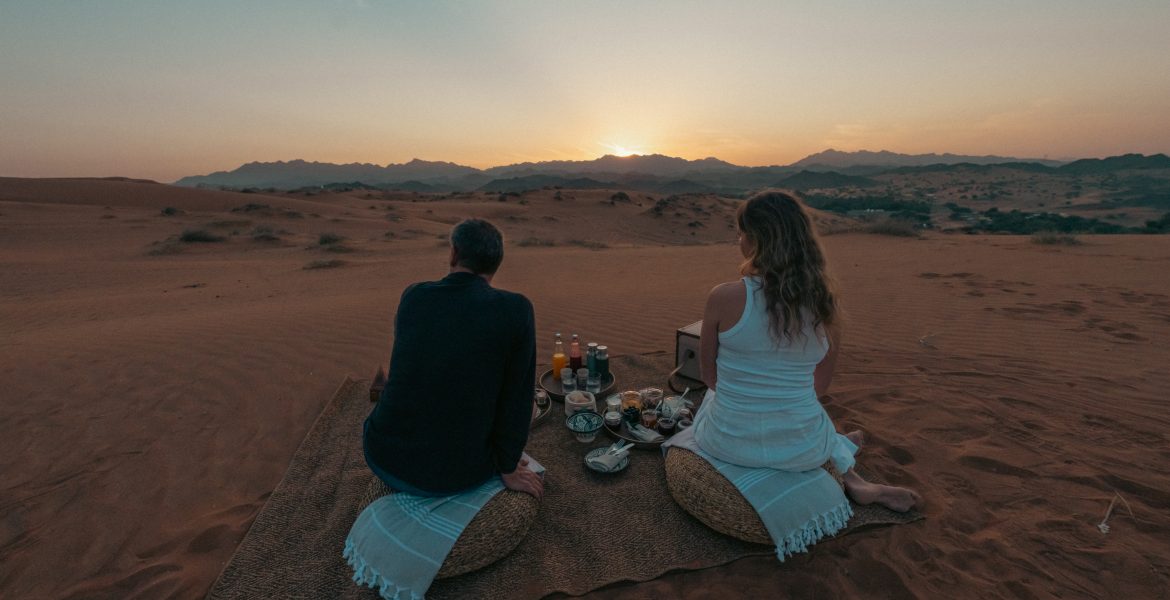
The journey to Parvara itself becomes the first course. As guests are collected for the ascent into Jebel Al Hamri, the road stretches on, slowly unravelling the outside world. Along the way, a light picnic is prepared in advance by the culinary team, shaped by preferences shared before arrival. Menus vary from guest to guest, but the intention remains the same: food that refreshes and restores. A gently spiced chicken sandwich may be served alongside a separate, crisp salad, accompanied by grilled vegetables fragrant with herbs, hummus, pickles and a small sweet finish. Light and invigorating, the picnic is designed to awaken the senses, preparing the body long before the mountain comes into view.
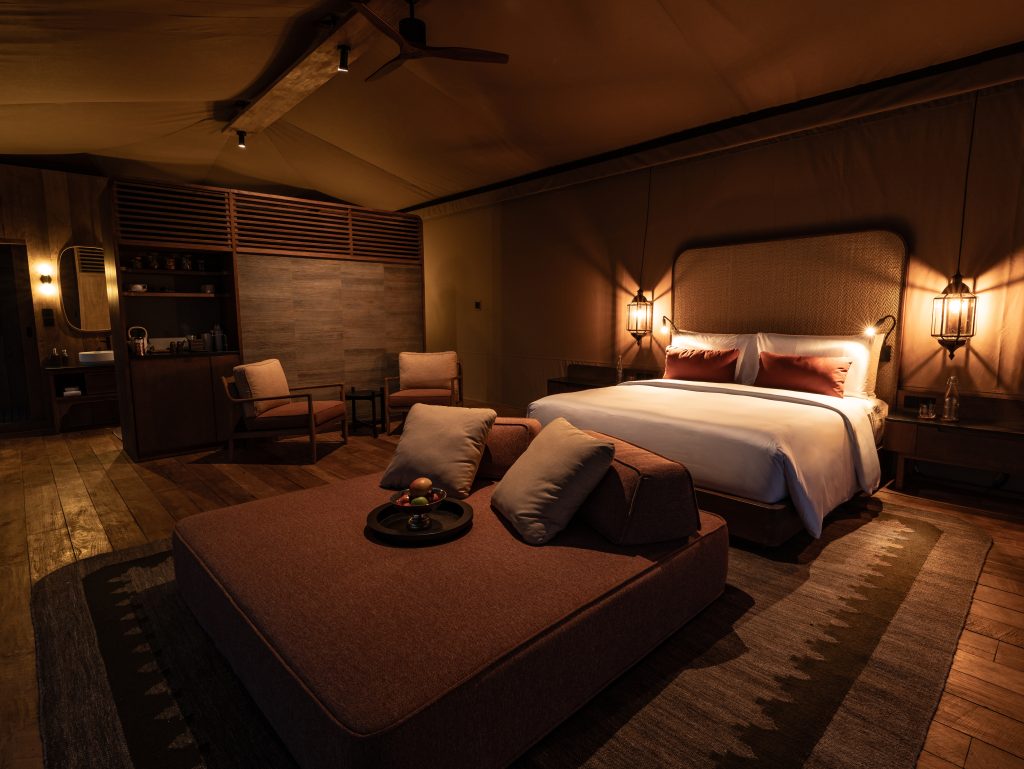
On arrival, everything guests might need is already in place. Inside each pavilion, the minibar feels less like a bar and more like a quietly stocked kitchen: fresh juices and fruits, simple salads, and small flavourful dishes such as, well-seasoned chicken meatballs, all presented in glass jars and earthenware bowls. Coffee beans sit beside a grinder and French press, allowing coffee to be prepared slowly, by hand, preserving its full aroma and depth of flavour. Dates, nuts, dried fruits, seed crackers, olive oil, tea and herbs complete the setting. No industrial or sealed elements; everything is fresh, simple and prepared with intention. Everything is arranged with a quiet sense of order, in glass, clay and wood, reinforcing calm rather than choice. Nothing packaged, nothing loud. Everything deliberate.
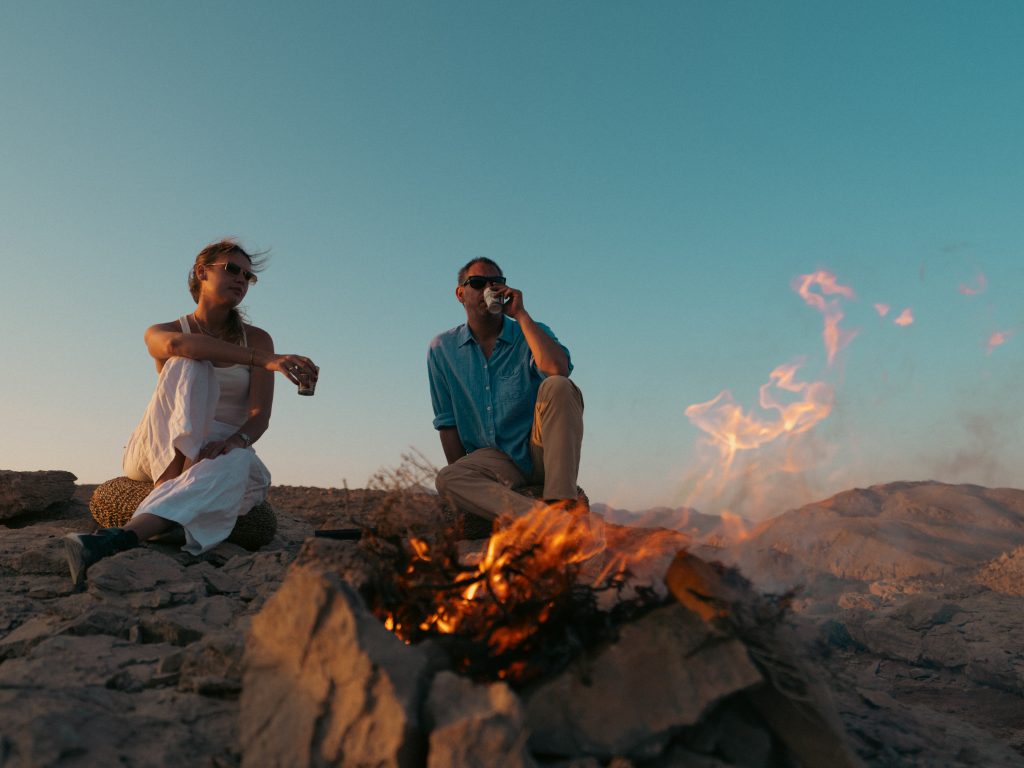
Before dinner, the evening opens with a quiet tea ceremony in the fire-lit seating area just outside the pavilion. As daylight softens, fire bowls are lit, and bukhoor is gently blended and placed on the embers, its scent drifting through the mountain air. Tea is served with a small selection of delicate sweets: ghriba, neat cubes of chocolate cake and nut-based confections, each offered in considered portions. From somewhere within the mountain, Parvara’s music surfaces briefly, distant and never loud, carried by the breeze before fading again. This pause is not designed to impress, but to settle the senses, a moment of arrival before the night unfolds.
Dinner then draws guests further into the landscape, to a natural clearing resembling a wadi, where over seventy candles flicker against stone, and two fire pits warm the evening air. Here, the chef cooks entirely over open flame while a butler serves each course with quiet precision. There is no menu to choose from and nothing to order; dinner is composed in advance, shaped around dietary preferences and allergies shared before arrival, allowing guests to surrender the final decisions of the day, leaving room for surprise to unfold.
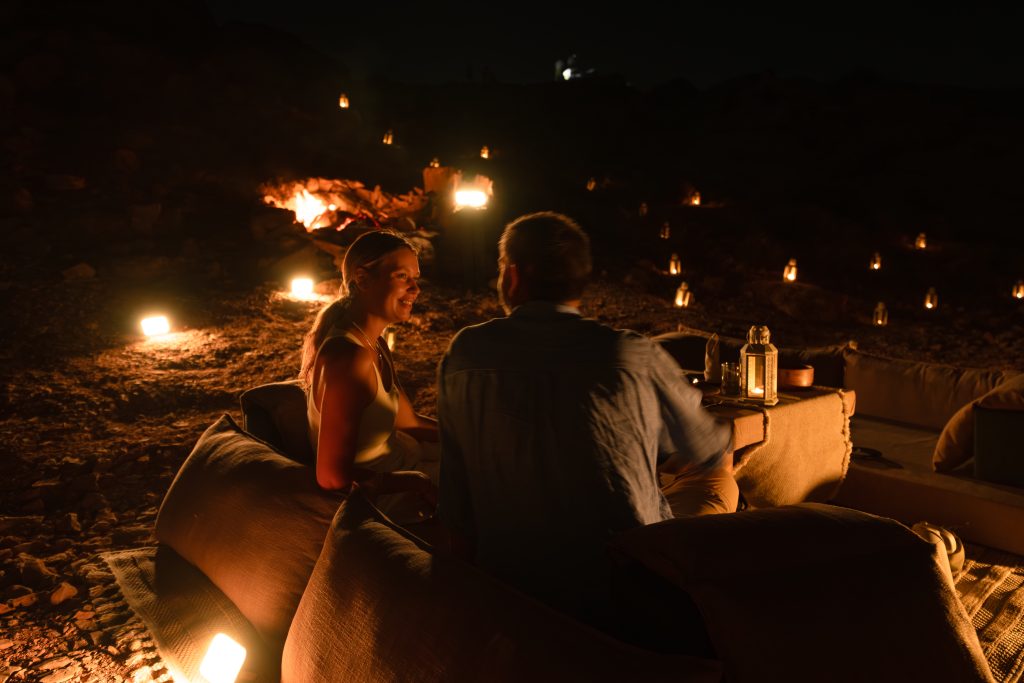
What follows is always considered and seasonal, changing from stay to stay. A meal might begin with fresh vegetables, followed by sardines grilled simply with herbs and served alongside freshly pressed juice. Chicken and meat may follow, fire-kissed, beautifully presented and unforced. Dessert can arrive warm, baked within half an orange peel, somewhere between cake and brownie, scented and elemental. The cooking is never renamed or reinterpreted; it speaks through fire, timing and restraint. Conversation fades naturally, replaced by the crackle of fire and the sound of wind moving through the wadi.
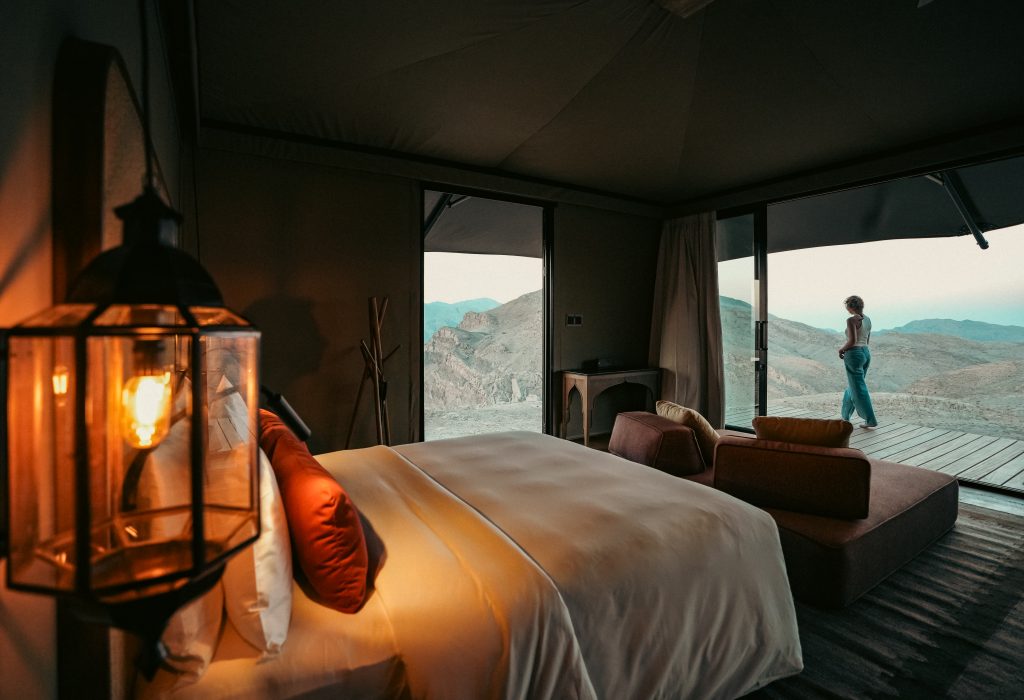
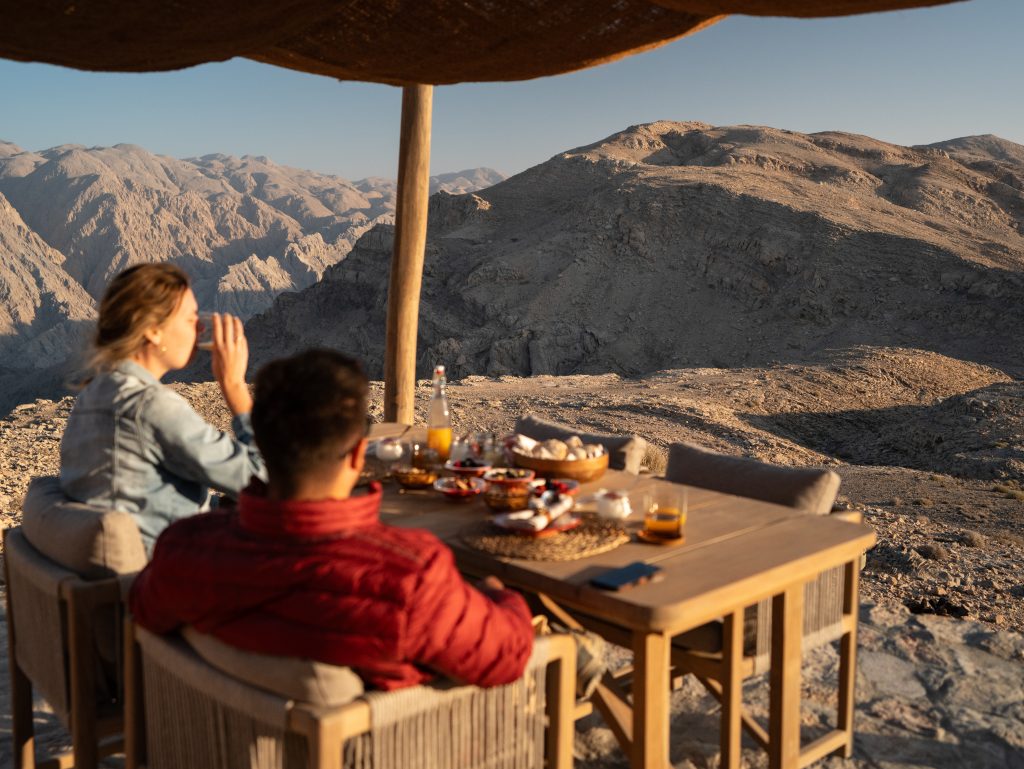
Morning arrives just as quietly. Before the day’s hike, the butler prepares coffee at dawn, the aroma drifting through cool mountain air. On returning, breakfast is already waiting: fruits, yoghurt, granola, nuts, butter, olives, two kinds of jam, fresh bread and shakshouka cooked on fire in front of the pavilion. The table feels generous without being heavy, an abundance of small bowls rather than a single dominating plate. The dining area sits completely outdoors, immersed in the silence of the valley. Warm sun, fresh breeze, no soundtrack beyond nature.

At Parvara, food is not an amenity. It is not scheduled, branded or explained. It appears when needed, disappears when finished, and lingers only as memory. Each meal is designed to support the rhythm of the stay: light when the body needs movement, grounding when the day slows, comforting without excess. This is cuisine stripped of performance and returned to purpose. Nourishment as presence. Dining as part of the landscape. Luxury is not found in complexity, but in how deeply one feels held by something simple, honest and quietly unforgettable.